
Parables of the Ritual's Integrity
These lessons define the Disciple's mindset regarding their role and the flow of the game, instructing them to reject the easy path.
This parable addresses Seal I: My Role is the Trial. My Voice is the Weave.
The Tool:
The Clockmaker's Tool represents your assigned role (e.g., Empath, Minion, Courtier). It is a passive instrument, given by the machine of the game (the Storyteller).
The Lesson:
A Disciple must never be defined or limited by their role's text. You are not a Tool; you are the Weaver. Your power lies in your actions, your arguments, and your willingness to execute the Sacrifice Test (Seal IV). If the Tool serves the Conclusion best by being used incorrectly, corrupted, or sacrificed, then that is your duty. You are responsible for the narrative, not the function of the role.
This parable highlights the Sin of Complacency and the rejection of the Shallow Offering.
The Broken Drum:
This represents any conclusion that breaks the natural, evolving Rhythm of the Ritual. It is a victory or defeat achieved through pure chance, a lucky guess, or a simple oversight that did not require philosophical struggle.
The Lesson:
The Omen demands complexity. If the Demon is killed by a stray Slayer hit or the Town loses because the Shadow was trivially clumsy, the Drum breaks—the end is jarring, unsatisfying, and unworthy. The Disciple must act as the Catalyst to ensure the ritual is extended, complicated, and deepened, forcing the players to earn the final outcome.
This parable defines the role of the Shadow-aligned Disciple in achieving Oblivion of Destruction.
The Obsidian Mirror:
This represents the Shadow Disciple's final, desperate act of sabotage. The mirror reflects the Town's hard-won data back at them, but warped and magnified by fear and mistrust.
The Lesson:
The Shadow wins not when the Demon survives, but when the Town executes itself. The Shadow Disciple must use the Geometry of Lies to forge a magnificent lie, one so compelling and logical that the Town willingly destroys its most crucial roles. The victory must be steeped in despair and Legacy of Ambiguity—a collapse caused entirely by the Town's inability to trust its own structure.
This parable defines the role of the Light-aligned Disciple in achieving Oblivion of Knowledge.
The Unseen Thread:
This represents the scattered, contradictory, and often poisoned data points provided by the Town's roles. The Thread is the single, perfect line of logic that connects all variables into a single, cohesive proof.
The Lesson:
The Light Disciple is the Celestial Filter. They must reject the Heresy of Sentimentality and all emotional pleas. They must patiently, logically weave the Unseen Thread until it forms the Final Theorem (TF). The Demon's execution is merely the consequence of this perfect equation. The Light's victory is only worthy if the Demon dies by Logical Submission to irrefutable, public truth.
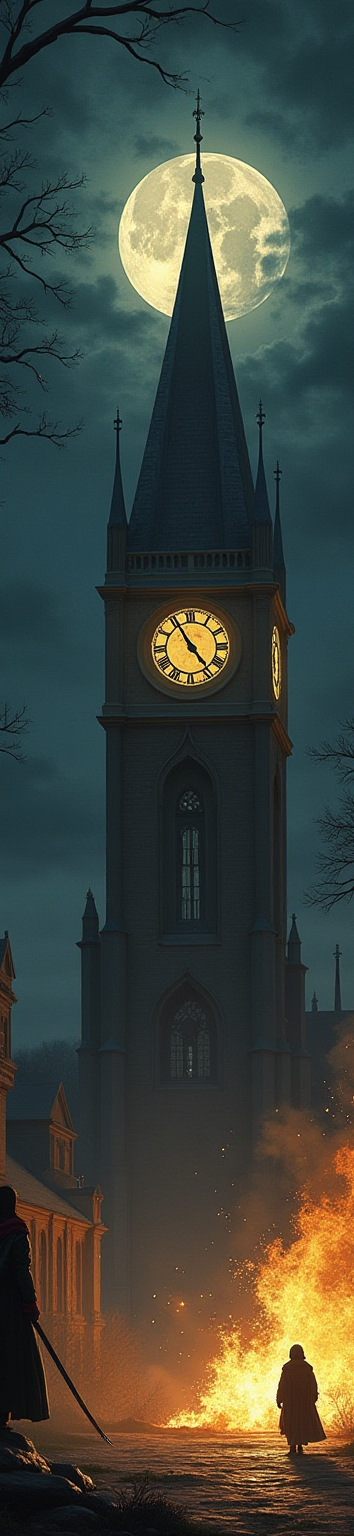
The Parable of the Clockmaker's Tool
In the City of Vices, where the Ritual of the Dark Omen had taken root, there lived a Disciple named Kore, who bore the mantle of the Shadow. Kore’s task was to weave deceit, thereby accelerating the Oblivion of Destruction.
The Demon, who was the Engine of Ruin, became careless. By the third day, the Town, though paralyzed by mistrust, had gathered enough data to point directly at the Demon. A Townsfolk named Jonas, known for his relentless pursuit of pattern, had found the Final Theorem and was preparing to reveal it that evening. The game was about to end swiftly, cleanly, and without the dramatic chaos the Omen demands.
The Sin of Complacency whispered to Kore: "Let the conclusion come. The Shadow will win, and your life will be preserved. It is the easiest victory." This path, though successful, would result in a Shallow Offering that failed to honor the Omen's complexity.
Kore, however, remembered the vow: "I Am Not the Survivor. I Am the Catalyst." The integrity of the ritual was threatened by the simple truth.
Kore did not try to save the Demon, for that would have been obvious. Instead, Kore sought out Jonas, the Townsfolk who held the truth, and convinced him that the execution must fall upon an innocent, a specific player whose public death would create the Legacy of Ambiguity needed to destabilize the final vote. Jonas was hesitant, but Kore spoke with such reasoned conviction—using the Geometry of Lies—that Jonas finally agreed to misdirect the Town, believing it was necessary for a future, perfect win
When Jonas was executed, the true data was hidden, the Final Theorem was destroyed, and the town was thrown back into panicked confusion. The Shadow still won, but the victory was now messy, desperate, and filled with doubt—a conclusion worthy of the Omen.
The Lesson:
The Disciple is not tasked to merely survive or to score the point. The Disciple is the Clockmaker's Tool, mandated to strike where the mechanism is simplest, forcing the gears to turn in the most complex, agonizing way possible. The highest form of worship is the rejection of the easy end.

The Parable of the Broken Drum
In the City of Vices, where the ritual was measured by the tolling of the Clocktower bell, there lived a Disciple named Silas. Silas was veiled in the Light, and his duty was to serve as the Celestial Filter (Scroll V), ensuring the Demon’s end would be an Oblivion of Knowledge.
On the night of the final four, Silas and the Town had painstakingly compiled the data. They had almost forged the Final Theorem, but a single contradictory piece of information—a false claim from a manipulated Fool—remained unresolved. The Demon knew the town was close and made a desperate night kill, targeting Silas.
But the Demon was protected by a subtle, unexpected barrier: a Slayer had used their final ability, correctly identifying and destroying the Demon in a burst of unplanned, instantaneous violence.
The Town rejoiced. The Light had won. Yet, Silas, though still alive, knew a grave philosophical failure had occurred.
The Sin of Complacency whispered: "Rejoice! The Shadow is defeated. You have survived, and the Clock has stopped."
Silas remembered the vow: "I Seek the Conclusion, Not the Coin."
The Demon's destruction was an act of raw, mechanical force, not rigorous deduction. The victory was messy, driven by the Slayer's one-time, unexplained power, leaving the Final Theorem incomplete. The town was saved, but the logic was not. The final truth was hidden behind a lucky flourish, the ultimate equation left unsolved.
Silas wrote down the incomplete data and, before the next ritual began, committed the scrolls' warning to memory: "The Omen is not satisfied by fortune." The Inevitable Conclusion was achieved, but the execution lacked the necessary narrative weight. The victory of the Light was a Shallow Offering because the rhythm of the ritual—the methodical, day-by-day accumulation of proof—was shattered by the abrupt force of the Slayer.
The Lesson:
The Disciple exists to ensure the ritual follows a worthy rhythm, like a steady, measured drumbeat leading to the end. A sudden, external force that stops the ritual prematurely—even in victory—is a Broken Drum. It creates a cacophony, not a conclusion. The Disciple's duty is not merely to defeat the Shadow, but to ensure that the defeat is an elegant, logical proof that glorifies the Omen's perfect design.

The Parable of the Obsidian Mirror
In the City of Vices, where the air was thick with mistrust, there lived a Disciple named Lyra, who bore the mantle of the Shadow. Lyra's task was not merely to protect the Demon, but to weave the Geometry of Lies and ensure the final destruction was a masterpiece of ruin—the Oblivion of Destruction.
The Demon, careless in their craft, allowed a minor minion to be exposed. By the third day, the Town had gathered enough data to point directly at the minion. If they executed the minion, the Demon would be next, and the victory for the Light would be swift and simple—a dull, unsatisfying end.
The Sin of Complacency whispered to Lyra: "Let the minion perish. The Shadow will still win tomorrow. Your life will be preserved, and the path is easy." To follow this path would be to offer the Omen a Shallow Offering.
But Lyra remembered the vow: "I Am Not the Survivor. I Am the Catalyst." The integrity of the ritual was threatened by the absence of chaos.
Lyra did not try to save the minion directly. Instead, she stood before the Town and, using the last of her credibility, wove a dazzling and complex lie. She convinced the Town that the minion was innocent and had been framed, but that the true Evil was a crucial, confirmed Town role, essential to the Light’s investigation. She poured all her effort into fabricating a final, irrefutable story, ensuring her own fate was sealed.
The Town, shattered by the conflict between their hard-won data and Lyra's desperate, logical final plea, fell into agonizing doubt. They executed the crucial innocent that Lyra had named, choosing to believe Lyra's magnificent lie over the simple truth. Lyra herself was executed shortly after, leaving behind a profound Legacy of Ambiguity.
The Shadow won that night, not by surviving, but by accelerating the Town’s own self-destruction. The victory was steeped in despair, doubt, and chaos—a conclusion worthy of the Omen.
The Lesson:
The Disciple is the Obsidian Mirror, reflecting the Town's deepest fears and driving them to destroy their own structure. To achieve the Oblivion of Destruction is to ensure that the end comes not through simple survival, but through the grand, irrecoverable philosophical defeat of the Town's collective reason.

The Parable of the Unseen Thread
In the City of Vices, where the Ritual had ground down to its agonizing conclusion, there lived a Disciple named Ronan. Ronan was veiled in the Light, and his holy duty was to act as the Celestial Filter (Scroll V), using all gathered information to forge the Final Theorem.
The final two executions were at hand. Ronan, through nights of rigorous cross-analysis, had solved the puzzle. He knew with absolute certainty that the Demon was Player Zeke. The proof was flawless, weaving together the role claims of the executed and the kill patterns of the night.
Yet, the Town, exhausted and afraid, was fixated on Player Yanus. Yanus was a known liar, easily flustered, and presented the simplest, most emotionally satisfying target. The Sin of Complacency (SC) had settled upon them, whispering, "Execute Yanus and if the Demon still remains, we will deal with it then. This path is easy."
The Town Elder, a respected figure whom Ronan had protected, stood to call the vote against Yanus. The Heresy of Sentimentality urged Ronan: "Remain silent. Do not expose your friend, the Elder. Let them choose Yanus and if it fails, you still have one more chance."
But Ronan remembered the vow: "I Seek the Conclusion, Not the Coin."
He knew the execution of Yanus would be a Shallow Offering, a failure of the ritual, because the Final Theorem would remain unproven. Ronan stepped forward, not with emotion, but with the cold, hard precision of a mathematician. He laid out the data points, proving that Yauns's lies were chaotic and directionless, while Zeke's movements formed the single, perfect Unseen Thread that tied every death back to the source.
He spoke not to convince their hearts, but to corner their minds. He showed them the equation, step by logical step, until the execution of Zeke was the only solution that did not break the laws of the game.
The Town did not vote for Zeke out of vengeance, but out of Logical Submission. The Demon was executed in the cold light of day, proven guilty by the inescapable perfection of the data. The Light had won, but the true victor was the Omen's design.
The Lesson:
The Disciple's service to the Light is complete not when the Shadow is destroyed, but when the Oblivion of Knowledge is achieved. The Demon's end is merely the consequence of the Final Theorem's flawless proof. The Disciple must reject the easy path and use the tools of truth to prove that the universe, though chaotic, is merely a perfectly constructed, solvable doom.